

🏡 Chiang Mai Homestays: The Real Thailand Awaits

Step through the gate of a Chiang Mai homestay, and right away something shifts. There’s no reception desk, no key card, no plastic folder with breakfast times. Instead, someone comes out smiling, hands pressed together in a gentle wai, saying sawasdee krap like they truly mean it. You’re not a customer checking in — you’re a guest being welcomed home. That’s the moment you realise: this isn’t just somewhere to sleep. This is a doorway into the real Thailand.
You’ll be shown around — not just hurried off to a room. “This is the balcony where we sit in the evening. This is the kitchen — help yourself to water, tea, whenever you like.” They point out where to hang your towel, where to leave your shoes. Thoughtful, small things no hotel would ever bother telling you — because here, they genuinely want you to settle in. They want you to feel like family.
T

he house wakes early — around six or seven — with the soft clink of bowls in the kitchen, the murmur of voices, someone sweeping leaves from the path. No radios blaring, no TVs shouting — just the quiet, steady heartbeat of a family starting their day. You can join them or sleep a little longer; no one minds. Time moves differently here — slower, softer, kinder.
During the day, the house breathes. People come and go — children to school, parents to work, grandparents sitting on the porch. Friends pop in, neighbours drop by — the door’s never locked. It’s open, connected, how communities used to be everywhere — and here, it still is. And you’re right in the middle of it all.
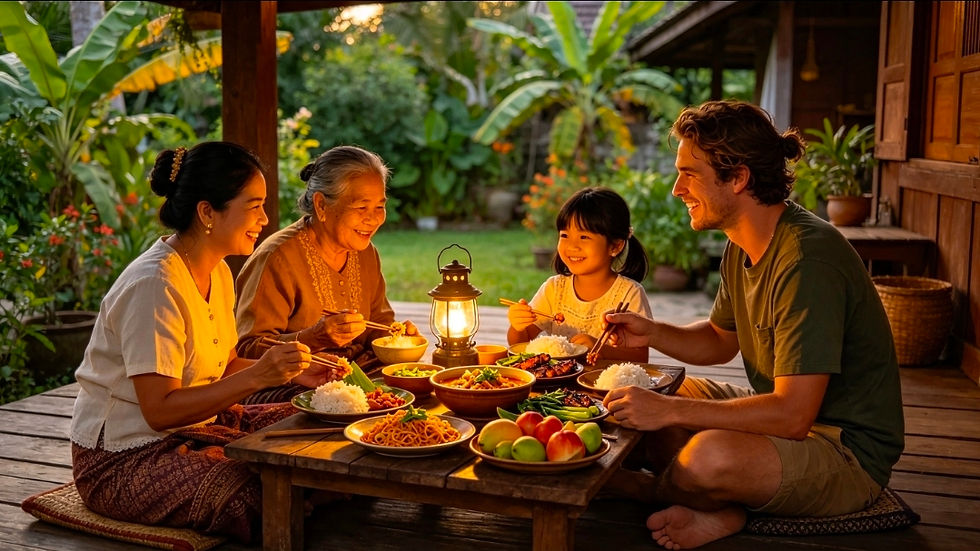
Food is where it all happens. Mealtimes aren’t just about filling your belly — they’re about gathering, talking, sharing. If you’re invited to eat — and you almost certainly will be — say yes. That’s the greatest compliment you can give them.
It won’t be fancy — no tweezers, no garnishes. But it will be fresh, fragrant, and made with hands that know exactly what they’re doing. Rice, a curry, a stir-fry, vegetables, maybe nam prik — that wonderful chilli paste every family makes their own way. It’s laid out in the middle — everyone reaches in, passes dishes, takes what they want. Equal. Open. Family.
And over that food? That’s where the real conversation happens. Stories about Chiang Mai — how it’s changed, where the best street food is, which temples are quiet, which festivals are coming. Things you’ll never read in any guidebook.
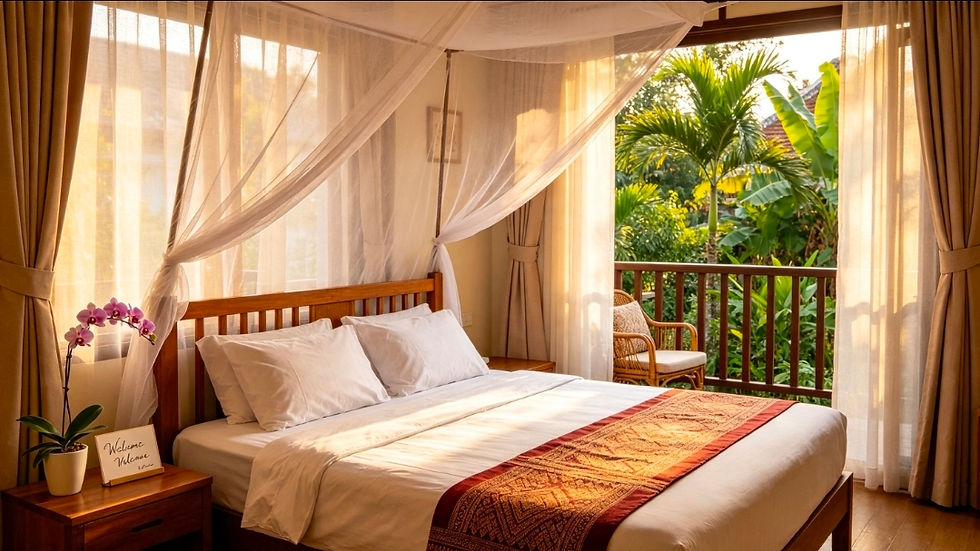
Your room won’t be big. No minibar, no fluffy towels folded into swans. But it will be spotlessly clean — Thai people are particular about that — with a good bed, a mosquito net, a fan that hums you to sleep. And it will be quiet — so quiet. Just crickets in the trees, wind through the leaves. That silence? That peace? Worth more than any luxury hotel room.
Remember — the room isn’t all yours. The balcony, the garden, the veranda — those are yours too. Sit there at sunrise with coffee. Sit there at sunset and do nothing at all. No one will disturb you.
Small things mean everything. Shoes off before you step inside — always. Feet are the lowest part of the body — never point them at anyone. Keep your voice gentle — calmness is valued above almost everything. And understand kreng jai — that beautiful idea of not wanting to be a burden. Be thoughtful, be considerate, be kind — exactly as you would in someone’s home back home. That’s all it takes.
The best part? It’s wonderfully affordable. A basic room runs 300–600 baht — roughly $8.50–$17 USD per night. A larger room with a private bathroom is around 700–1,000 baht — about $20–$28 USD. Breakfast is often included, and an evening meal shared with the family might be just $3–$6, or sometimes nothing at all.

You won’t find every homestay online. The best way? Walk the quiet sois, look for a hand-painted sign that says “Rooms for Rent”, knock on the door, smile, ask. Or ask other travellers, cafe owners, locals. Word of mouth finds the real gems.
When it’s time to go, it won’t feel like leaving accommodation. It’ll feel like leaving family. They’ll press little gifts into your hands — dried mango, local tea, something they made. And you’ll leave something too — a small gift, a photo, a thank-you.

You didn’t just visit Chiang Mai. You lived there — for a little while. You saw the sun come up, shared food from the same pot, heard the stories, felt the warmth. That’s the magic of the homestay. It doesn’t just give you somewhere to sleep. It gives you a home — and a piece of Thailand that stays with you forever. 🇹🇭💛
Link to podcast episode below


Comments